
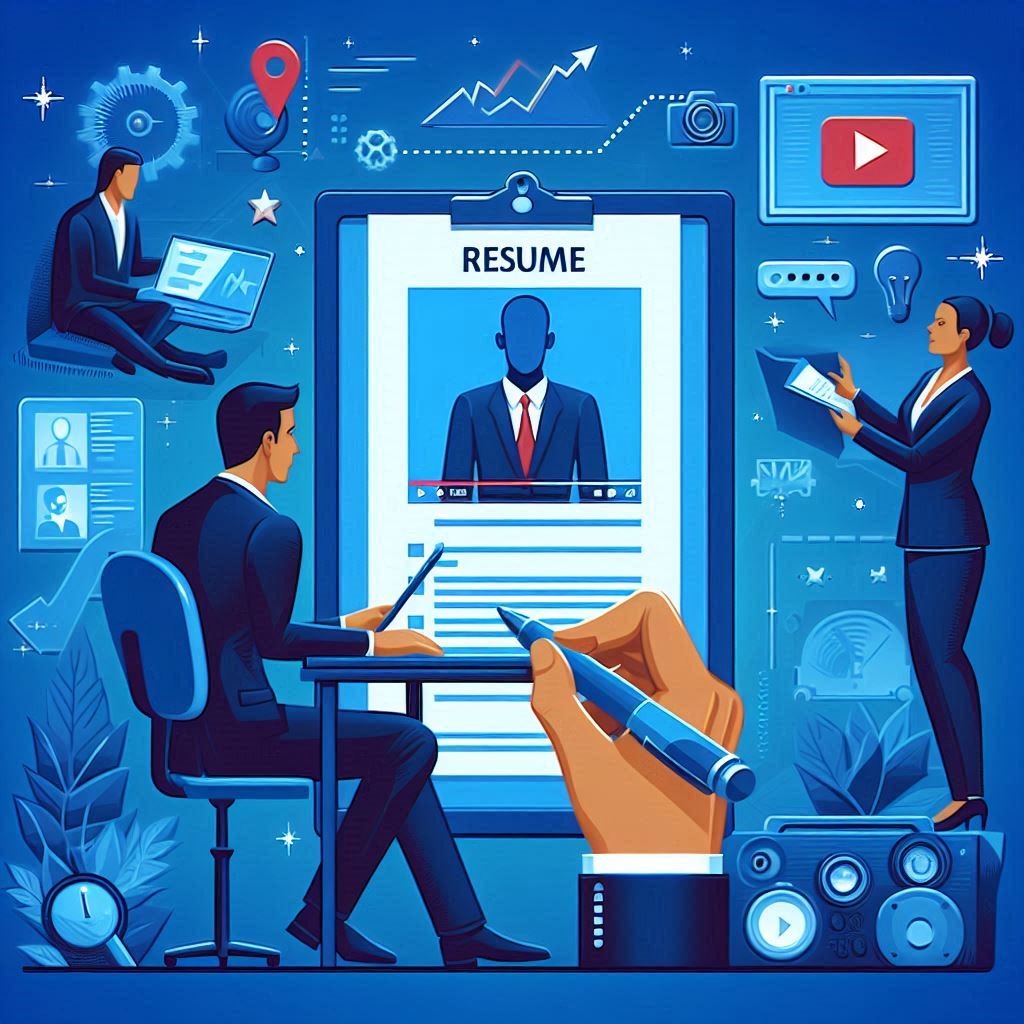
The Idea Sounds Better Than the Reality
You record yourself on camera. You tell your story. You show your personality, your enthusiasm, your communication skills. The hiring manager watches it, gets a feel for who you are, and invites you to interview.
That’s the pitch for video resumes. And on the surface, it makes sense. Written resumes are flat. They can’t convey tone, energy, or interpersonal skills. A video solves that.
But the reality is more complicated. Most hiring managers don’t watch video resumes. Most ATS systems can’t process them. They introduce bias risks that companies are actively trying to reduce. And a bad video resume is far worse than a mediocre paper one.
This doesn’t mean video resumes are never useful. In specific industries and specific situations, they can be a genuine advantage. The key is understanding when that is and when it isn’t.
The Case Against Video Resumes
Bias Risk
This is the single biggest problem with video resumes, and it’s the reason many companies refuse to accept them.
A written resume doesn’t show your race, age, gender, weight, physical appearance, accent, or disability status. A video resume shows all of these immediately. This creates opportunities for both conscious and unconscious bias.
Research from the National Bureau of Economic Research has consistently shown that hiring bias based on race and gender exists. Companies invest significant resources in reducing bias in hiring: blind resume reviews, structured interviews, standardized evaluation criteria. Video resumes undo all of that work.
Some companies have explicit policies against accepting video resumes for exactly this reason. Their legal and HR teams have determined that the bias risk outweighs any potential benefit.
ATS Incompatibility
Applicant tracking systems are designed to process documents: PDFs, DOCX files, and plain text. They cannot process video files. If you submit a video resume through an ATS portal, it either gets rejected outright or sits as an unviewable attachment that nobody opens.
Even if you include a link to a hosted video (YouTube, Vimeo, a personal website), most ATS systems don’t flag video links for recruiter attention. The link sits in a text field that the recruiter may never read.
Recruiters Won’t Watch Them
The average recruiter spends six to eight seconds on an initial resume screen. Watching even a 60-second video requires ten times that investment. In a stack of 200 applications, nobody is watching 200 one-minute videos. That’s over three hours just for initial screening.
In practice, video resumes get watched if the recruiter is already interested in you. Which means the video didn’t create the interest; something else did (your written resume, a referral, your LinkedIn profile). The video is supplementary at best.
A survey by SHRM (Society for Human Resource Management) found that only about 17% of hiring managers had ever watched a video resume submitted by a candidate. That’s a lot of effort for an 83% chance of nobody seeing your work.
Production Quality Creates New Problems
A well-produced video resume requires good lighting, clear audio, a professional background, a stable camera, and editing skills. If you don’t have these things, your video will look amateur, which hurts your candidacy more than not submitting a video at all.
Bad lighting makes you look unprofessional. Background noise is distracting. A shaky camera is nauseating. Awkward cuts and “ums” make you seem unprepared.
And here’s the uncomfortable truth: production quality advantages favor candidates with more resources. Someone with a ring light, a good microphone and video editing software will produce a better video than someone filming on an older phone in a small apartment. This creates an uneven playing field that has nothing to do with job qualifications.
Accessibility Issues
Not everyone can watch videos. Recruiters with hearing impairments need captions. Recruiters in open offices can’t play audio without headphones. Recruiters on slow internet connections can’t stream video.
If your resume is a video, you’re excluding anyone who can’t or won’t watch it. A written resume is universally accessible.
The Case For Video Resumes
Despite the problems, there are genuine scenarios where video resumes add value.
Industries Where Personality Is the Product
If you’re applying for roles in acting, broadcasting, media hosting, sales, public relations, or client-facing consulting, your on-camera presence is directly relevant to the job. A video resume lets you demonstrate the exact skill the employer needs.
For TV anchors and on-air reporters, a video reel isn’t optional; it’s expected. For sales professionals, demonstrating your pitch delivery and interpersonal warmth on camera can be more persuasive than bullet points.
When Employers Specifically Request One
Some companies, particularly in creative and entertainment industries, include “submit a video introduction” as part of their application process. When the employer asks for it, provide it. This is a test of your ability to follow instructions as much as anything else.
If they don’t ask for it, don’t assume they want it.
Startup and Small Company Applications
At small companies without formal ATS systems, your application often goes directly to a founder or hiring manager’s inbox. In this context, a short video introduction attached to your email can stand out. The informality of a startup environment makes unconventional application materials more welcome.
The key word is “short.” Nobody at a startup has 10 minutes to watch your life story. Sixty to ninety seconds is the upper limit.
International Job Applications
If you’re applying for a role in a different country, a video can address language concerns proactively. Employers hiring internationally sometimes worry about communication abilities. A short video demonstrating fluent, professional communication in the required language can eliminate that concern before it becomes a reason to pass on your application.
Personal Website or LinkedIn Supplement
A video resume works well as content on your personal website or LinkedIn profile. It’s not replacing your traditional resume; it’s supplementing it. Anyone who visits your profile can choose to watch it. It’s there for the people who want more context about you, without forcing it on people who don’t.
How to Make a Good Video Resume
If you’ve determined that a video resume is appropriate for your situation, here’s how to make one that doesn’t hurt you.
Keep It Under 90 Seconds
Seriously. Under 90 seconds. Most hiring managers who actually watch video resumes say they stop watching after one minute. Front-load the most important information.
A 60-second video resume should cover:
- Who you are (5 seconds)
- Your current role and relevant experience (20 seconds)
- Your key skills or specializations (15 seconds)
- One or two standout achievements with specific metrics (15 seconds)
- What you’re looking for (5 seconds)
That’s it. No long introductions. No life story. No explanation of why you’re passionate about the industry. Get to the point.
Script It, But Don’t Read It
Write a script. Practice it until you can deliver it conversationally without reading. You should sound natural and confident, not like you’re reading a teleprompter.
The sweet spot is between scripted and spontaneous. You know your talking points, but you’re speaking to the camera like you’re talking to a person, not reciting a monologue.
Invest in Basic Production
You don’t need a professional studio. You do need:
Lighting: Face a window for natural light, or use a simple ring light. Avoid overhead fluorescent lighting and backlighting (don’t sit with a bright window behind you).
Audio: Use an external microphone if possible. Your phone’s built-in mic picks up room echo and background noise. A $30 lavalier mic makes a huge difference.
Background: A clean, uncluttered background. A plain wall, a bookshelf, or a home office setup. Remove anything distracting or unprofessional.
Camera: Your phone’s front camera is fine if it’s relatively recent. Set it at eye level, not below (which creates an unflattering upward angle). Use a tripod or stack books to stabilize it.
Framing: Head and shoulders in frame. Not too close, not too far. Center yourself. Leave a small amount of headroom.
Dress as You Would for an Interview
The same rules apply. If the company is corporate, wear business attire. If it’s a casual startup, business casual is fine. When in doubt, overdress slightly.
Edit Ruthlessly
Cut every “um,” “uh,” and dead air. Cut any section where you stumble or lose energy. Tighten transitions. The final product should feel polished and intentional.
Add a simple title card at the beginning with your name, title and contact information. Add a brief end card with your email and LinkedIn URL.
Don’t add background music, transition effects, or graphics. They make you look like you’re trying too hard. Clean and simple wins.
Add Captions
Always add captions to your video. This addresses accessibility concerns, makes your video watchable on mute (which is how most people browse social media) and demonstrates professionalism.
Auto-generated captions are a starting point, but review them for accuracy. Misspelled words in captions are the video equivalent of typos on a resume.
What Not to Do
Don’t replace your paper resume with a video. The video is always a supplement, never a replacement. Every employer needs a written, parseable document.
Don’t make it too long. Three minutes is too long. Five minutes is way too long. Keep it under 90 seconds.
Don’t use it for every application. It’s appropriate for specific situations. Submitting a video resume for a corporate accounting role through Workday is a waste of your time and a mismatch of format to context.
Don’t include personal information that doesn’t belong on a resume. Your hobbies, your family, your personal philosophy. Stick to professional content.
Don’t post it publicly without thinking it through. A video on YouTube is findable by current employers, future employers and everyone else. Make sure you’re comfortable with that.
Don’t wing it. An unscripted, rambling video is worse than no video. Preparation shows.
The Platform Question
Where should you host your video resume?
YouTube (unlisted): Free, reliable, accessible. Set the video to “unlisted” so it doesn’t appear in search results but anyone with the link can view it. Share the link in your application or email.
Vimeo: More professional-looking player. Offers password protection and download restrictions. The free tier is limited; paid tiers offer more control.
Personal website: Host the video on your own site for maximum control over the viewing experience. Embed it alongside your written resume and portfolio.
LinkedIn: Upload directly to your LinkedIn profile as a featured item or as a post. This keeps it within the professional context where recruiters are already looking.
Avoid hosting on Google Drive or Dropbox. These platforms aren’t designed for video playback, and the viewing experience is poor.
The Paper Resume Still Comes First
Regardless of whether you create a video resume, you need a traditional written resume. Always. No exceptions.
The video is an addition to your application, not a substitute. It supplements your written resume by showing personality and communication skills. But the written resume is the document that gets parsed, searched, stored, printed and passed between hiring committee members.
Invest the majority of your resume-building time in the written document. Get the content right. Get the formatting right. Get the keywords right. Then, if appropriate, add a video as icing on top.
For thoughts on how resume formats will continue to evolve, read our piece on the future of resumes.
If you’re looking for a strong written resume to serve as your foundation, 1Template offers clean, professional templates that work for every industry and pass ATS screening.
A video resume can be a differentiator in the right context. But it’s never a replacement for a well-written, well-formatted document that clearly communicates your qualifications. Get the paper resume right first. Then decide if video adds value.